
Wall or floor safe: what to choose for reliable protection?
When it comes to home security, choosing the right place to store your valuables can be a challenge. Two of the most popular and secure options today are wall-mounted and floor-standing safes. While they share the same purpose—protecting what’s important to you—each has its own unique characteristics that set them apart.
So, which one is right for you? Let’s dive into their similarities, differences, and unique benefits to help you decide.
What are wall safes?
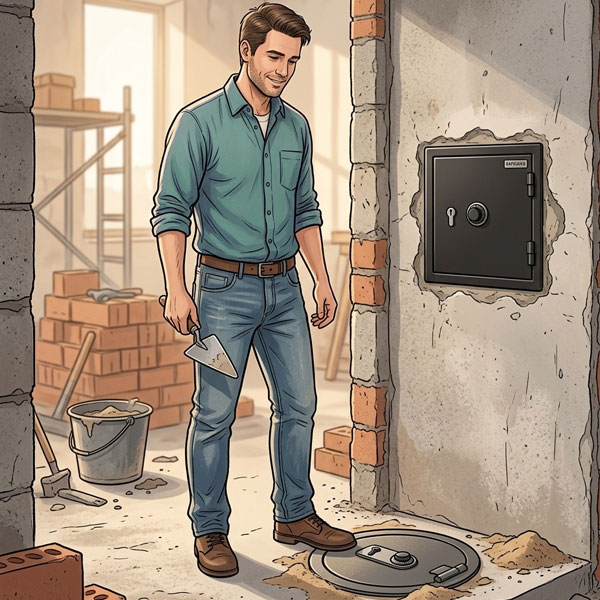 Wall safes are one of the most common types of storage used in private homes, offices and apartments. They are usually chosen for storing jewelry, cash, important documents, small electronics or keys.
As their name suggests, they are installed directly into the walls. This allows you to at least partially hide their presence. To enhance this advantage, the safe can be completely disguised - for example, behind a picture, mirror or furniture. Such concealment is the first and very important barrier for an attacker: what is not visible is harder to steal.
It is worth remembering that a wall safe should be installed professionally. The size and depth of your wall will dictate the dimensions of the safe itself. In Ukrainian realities, these are usually capital brick or concrete walls, which allow you to securely fasten the structure with anchors so that it is impossible to tear it out without destroying the building itself.
Floor safes: a hidden fortress
While wall-mounted models are all about convenience, floor-standing safes are all about maximum secrecy. They are mounted into the concrete base of the floor, making them virtually invisible to the naked eye.
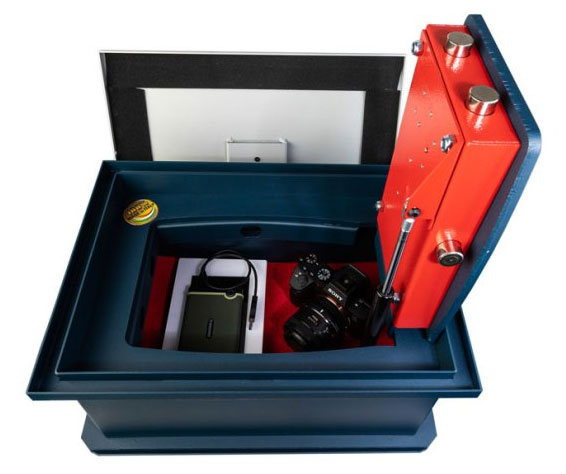 Such safes are ideal for long-term storage of valuables that you do not use every day. Since they are protected by a layer of concrete on all sides except the door, they provide an excellent level of burglary resistance.
However, the installation of such a safe requires special attention. In our conditions, this is usually a concrete screed in a private house or on the first floor of a multi-storey building. It is important to take into account the thickness of the pour so that the safe body is completely immersed in concrete, and on top it can be covered with laminate, tiles or carpet. This creates the illusion of a regular floor, where even an experienced burglar will not always guess to look for a hiding place.
When installation is impossible: rental nuances and technical limitations
There are situations when the idea of a wall or floor safe seems ideal, but circumstances prevent it from being implemented. This primarily concerns tenants. Today, in Kyiv and other large cities, many people rent apartments or private houses, and usually lease agreements strictly prohibit any major interventions in the walls or floor. You can’t just cut a niche in someone else’s concrete.
The same applies to businesses in rented offices. Even if you are the owner of the premises, sometimes technical conditions — for example, too thin interior partitions or a specific layout — simply do not allow you to securely install the model.
What to do in this case? Does this mean that your valuables should remain unprotected? Not at all. If you are limited in choosing a place to install it, you should pay attention to furniture safes. They are compact, easily installed inside a cabinet or desk and attached to the walls using anchor bolts through pre-prepared holes. This does not require the destruction of walls, but provides a basic level of security.
For businesses where the volume of valuables is usually larger, we recommend considering specialized safes for the office. They have a high burglary resistance class and allow you to organize the safe storage of documents and cash without the need for complex integration into the building structure.
Bottom line: which option is best for you?
The choice between wall and floor often comes down to two factors: ease of access and the technical capabilities of the room.
-
A wall safe is your choice if you plan to open it often (for example, to put documents or a watch after a working day). It is located at a convenient height.
-
A floor safe is ideal for “blind” storage of large sums of money, gold or family heirlooms. It is much harder to find.
-
A furniture or office safe is the best solution for rented premises or cases where major installation is not possible.
Regardless of which type you choose, the key to security remains high-quality installation. A built-in safe is only reliable when it becomes part of the structure of your home. SafeLuka specialists are always ready to help you choose a model of the required depth and protection class for your technical conditions.
FAQ (Frequently Asked Questions).
Can a safe be installed in a thin wall?
Answer: No, the wall thickness must be at least 10 cm greater than the depth of the safe for reliable concreting. If the wall is thin, it is better to choose a furniture safe with a floor mount.
Where is it more difficult to find a safe - in the wall or in the floor?
Answer: A safe in the floor is considered more secretive, since it is easier to completely mask it with a floor covering (carpet or laminate), while wall safes are more likely to give themselves away as irregularities behind the pictures.


