
Security Is More Than Just Locks: How to Protect Your Safe’s Contents from an Invisible Enemy
When choosing a safe, our minds are usually occupied with steel thickness, locking bolts, and key or digital lock complexity. We buy it to protect our valuables from burglars or fire. But as soon as the heavy door shuts, a hidden life begins inside the safe. And that is where an enemy appears against which even the best lock system is powerless. This enemy is humidity.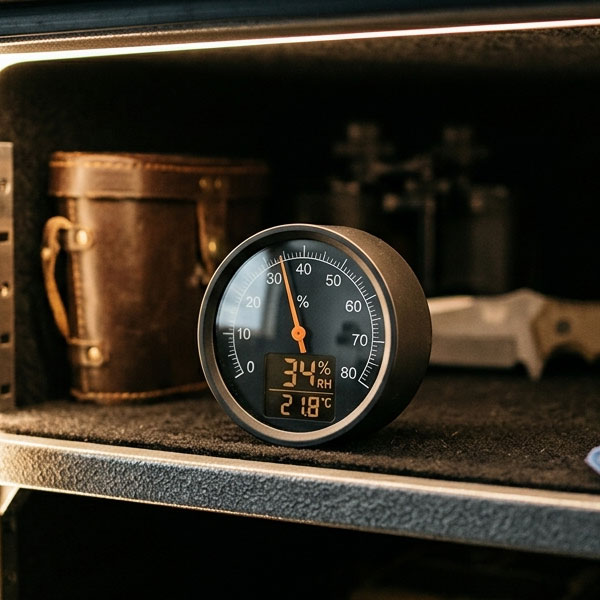 Today, home safes of Ukrainians hold much more than just cash or family jewelry. A safe has become a place for long-term storage of expensive hunting or tactical optics, night vision devices, thermal imagers, high-quality knives, and, of course, important documents. All these items share one thing: they are extremely sensitive to the microclimate.
A locked safe is a closed ecosystem. If the temperature in the room changes, the metal of the safe cools down or heats up, which can cause unnoticeable condensation to form inside. For an expensive scope or thermal imager, this can be a death sentence: lenses get covered with fungus from the inside, and electronics start to glitch.
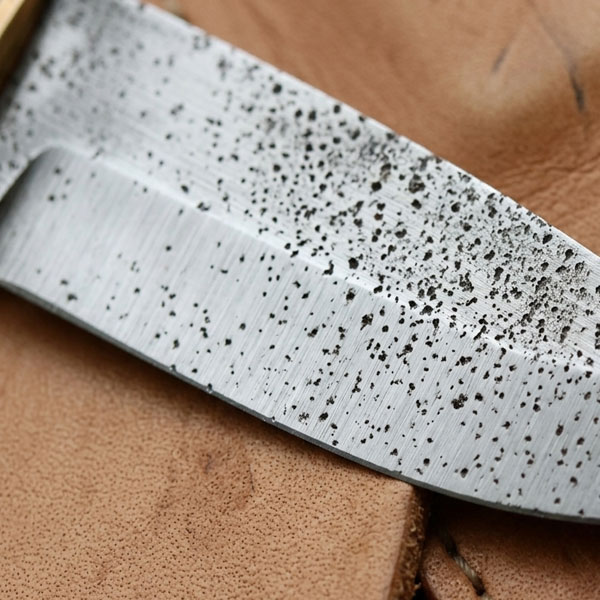 By the way, it is not just complex optics that need protection. Many naively believe that good knives are made of some "special" steel that is completely immune to everything. In reality, high-quality tactical and hunting blades are often crafted from high-carbon alloys. They hold an edge perfectly but are highly vulnerable to moisture. In a confined space, they can quickly develop a subtle rash of rust (pitting). Similarly, damp air eventually ruins important documents—they acquire a distinct heavy odor and begin to deteriorate.
To make your safe a truly secure haven, you should consider a few simple yet crucial nuances.
Where Does Your Safe "Live"?
In an effort to hide a safe from prying eyes as much as possible, people often try to install it in basements, crawl spaces, or unheated utility rooms. But from the perspective of preserving your items, this is the worst choice. A safe needs a stable climate. It is best to choose a spot in the inner rooms of the house—such as a bedroom, study, or walk-in closet—as far as possible from exterior walls that can freeze in winter. A stable room temperature is the first step toward dryness inside the safe.
Neighbors Matter
Sometimes we bring moisture into the safe ourselves without even realizing it. For instance, genuine leather is highly hygroscopic; it absorbs water from the air perfectly. If you put a knife in the safe directly in its leather sheath, the blade is guaranteed to start rusting. The same applies to firearms and optics in leather cases. Knives and devices are best stored separately from their "gear."
Another hidden source of dampness is batteries.
If a thermal imager, a night vision device, or an expensive flashlight is going into the safe for long-term storage, always remove the batteries or accumulators. Not only can they leak and ruin the contacts, but they also do not handle confined, damp spaces well on their own. As for documents, it makes sense to give them extra protection by packing them into thick, airtight zip-lock bags.
How to Create the Perfect Climate Without Outlets?
Since you cannot (and should not) run electricity into a regular safe for forced dehumidification, passive yet highly effective methods come to the rescue. The optimal humidity level for metal and optics is between 30% and 50%. A simple, small hygrometer helps control it. Place it on a shelf, and you will always know exactly what is happening inside.
The ultimate lifesaver is passive dehumidifiers based on silica gel. These can be either special pouches or compact canister dehumidifiers that change color over time, signaling that they have absorbed moisture. Just reactivate them on a regular radiator once every few months, and they are ready to protect your equipment again.
Comfort That Saves Your Gear
The interior space of a safe must be organized comfortably. When it is dark inside, we often pile things on top of each other, creating chaos. In such a "heap," natural air circulation is disrupted, and the hard bodies of the devices can scratch one another.
Therefore, good interior lighting is not a luxury or just a decorative element. When it is bright inside the safe, you immediately see the condition of every item and can spot dust or the first signs of moisture in time. It is much easier to arrange your gear neatly on the shelves when each item stands separately and "breathes." Moreover, in an emergency, proper space organization and light inside the safe will save precious seconds for quick access.
By purchasing a safe, we protect our investments from external threats. But by showing just a little care for the internal climate, we guarantee that when the moment comes, your expensive tech, optics, and important documents will be in perfect, working condition.
If you are thinking about how to properly organize the storage of things, or are just choosing a reliable storage for your home, visit our store "Safes and Locks", located in Kyiv at Pavla Skoropadskoho St., 16. Here you can see different models in person, evaluate their internal space, the convenience of the shelves and get professional advice. We will help you choose a safe that will protect your valuables from absolutely all sides.


