
Safe and vault market – trend analysis
A safe stopped being just a "heavy metal box" a long time ago. It's still thick steel, a reliable lock, and protection from fire or theft - but how and why people and businesses buy safes has changed quite a bit. Let's look at what the latest market data says, and what that actually means for an everyday buyer.How much is the "safe industry" actually worth
Analyst firms that estimate the size of the global safes and vaults market come up with pretty different numbers - anywhere from roughly $5 billion to $10 billion for 2025-2026, depending on how they calculate it. But almost everyone agrees on one thing: the market is growing 5-8% a year, and that's a steady, predictable trend rather than a one-off spike.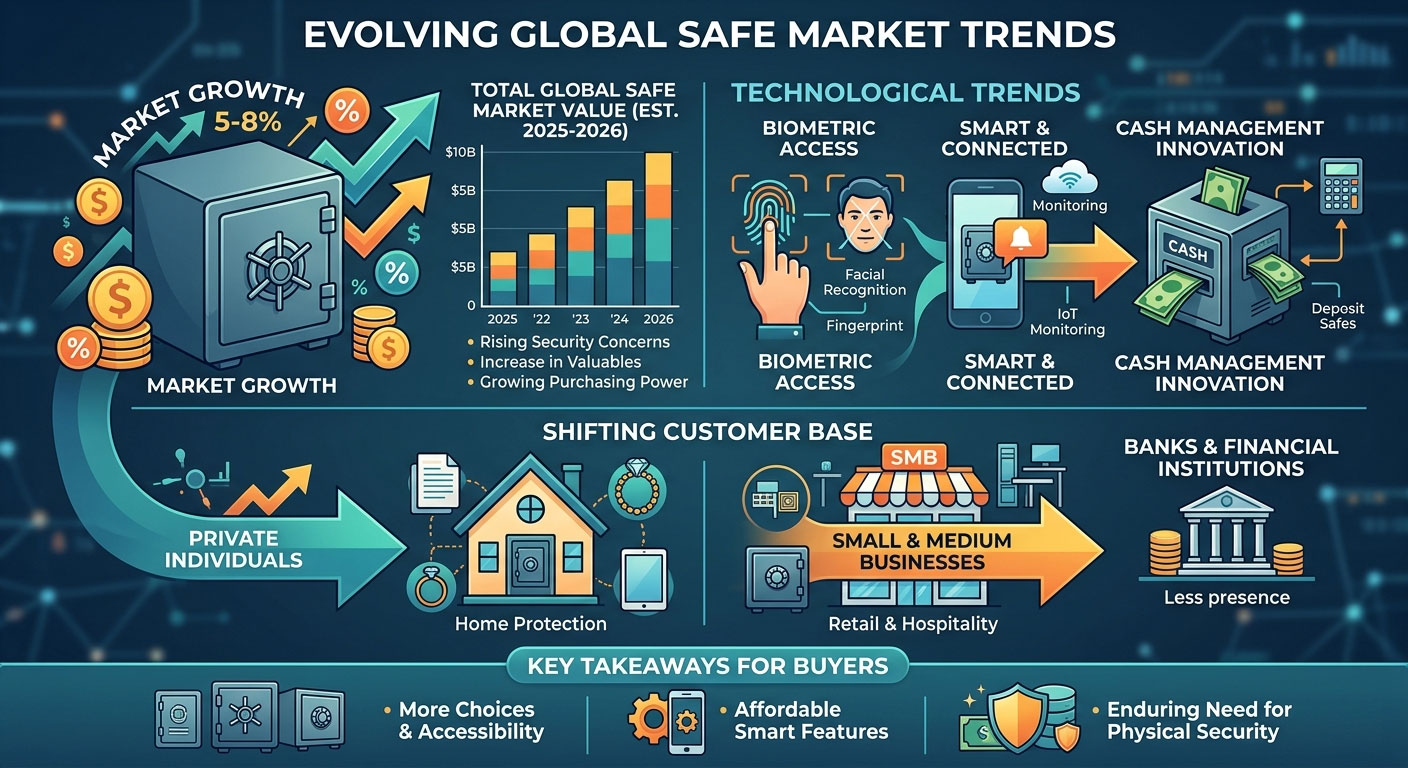
What matters more than the exact number is why the market keeps growing. The reasons are pretty simple:
- more people and businesses are worried about the safety of their belongings - burglary and fraud rates aren't going down;
- there's simply more to protect - from cash and documents to electronics and jewelry;
- overall living standards and purchasing power keep rising, so a safe is shifting from a "luxury item" to a normal household thing, much like a home alarm system.
Where safe technology is heading
This is the interesting part. A few years ago, a "modern safe" basically meant an electronic lock with a code instead of a key. Now the trend has moved further:- Biometrics and smart access. Fingerprint and face recognition - things that used to be associated only with banks and airports - are slowly making their way into household safes.
- IoT and remote monitoring. A safe can now alert the owner's phone if someone tries to open it, or let them check the lock's status remotely. That's especially useful for business owners who can't always be on site.
- The cashless paradox. You'd think less cash in circulation would mean less need for safes. In practice, it's the opposite: people and businesses increasingly want to protect physical valuables - documents, jewelry, important storage media, a backup cash reserve - precisely because the rest of life is going digital and is no longer something you can physically control.
Who's actually buying safes - and why
In short: it's not just banks anymore. The banking sector is still the largest buyer, but the fastest-growing category is regular businesses and private individuals - the so-called "non-banking" segment. The reasons are pretty clear: more and more small and medium businesses want to protect their cash and documents on their own instead of relying solely on a bank, while private owners want to protect their valuables at home.It's also worth highlighting cash management safes specifically - this is the type growing fastest in retail, restaurants, and hospitality, where a lot of cash is handled every day and there's a real need to cut down on theft risk or counting errors.
Deposit safes also remain a steadily popular category - these let you drop money or valuables in through a slot, but only the key or code holder can take them back out. Their popularity keeps growing alongside general caution around theft and fraud.
What this actually means for you
Global trends aren't just numbers for analysts to play with. They line up pretty closely with what anyone thinking about getting a safe actually runs into:
- a safe is no longer "either a bank or nothing" - more people are choosing to keep reliable storage right at home or in the office;
- technology keeps getting more accessible: things that used to be a premium add-on (biometrics, phone alerts) are gradually becoming standard even on more affordable models;
- demand for protecting cash stays high even in a world of cards and online payments - simply because cash and important documents aren't going anywhere from everyday life.


